METR proposes exercises for independent public assessment of frontier AI loss-of-control risks
METR published a proposal for exercises in which an independent assessor would examine developers' internal models and share evidence with the public, covering alignment, control and monitoring, and AI R&D acceleration.
All posts · 13, newest first
- I should’ve said “uncontrolled” not “uncontrollable”1 likes · 0 reposts
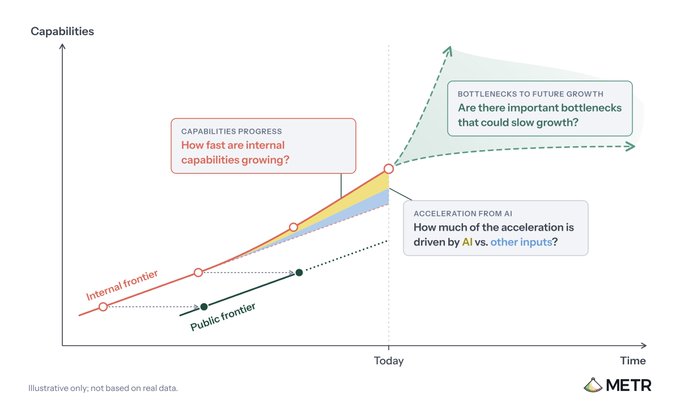
- This update from us is hefty, with five separate detailed writeups on different components of how to test for uncontrollable RSI It also has some great visual explanations of what we think the key questions are here, like this one on how we'd interrogate "has RSI begun?"
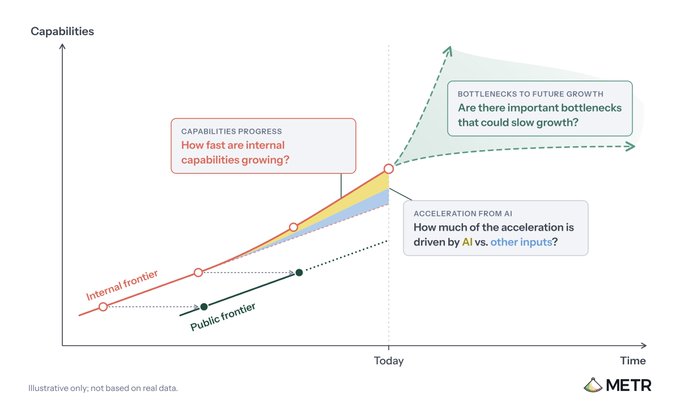 @metr_evals: (3) AI R&D acceleration If AI automates AI R&D, capability growth could outpace what alignment and control methods can handle. Our proposal is to analyze how much AI automation is accelerating capability growth internally. metr.org/blog/2026-10-1…42 likes · 0 reposts
 - I hope that METR is more empowered to look around and find additional ants in our collective kitchen@metr_evals: If an AI developer was on track to lose control of its internal agents, would anyone outside the company know? Today, we are sharing METR’s vision for how we would work with AI developers to openly assess and share evidence about this.62 likes · 1 reposts
- Today, METR is sharing its vision for its version of “embedded assessments” for AI loss of control. The goal of these exercises is to make sure the public receives good evidence about whether or not the AI industry in general is on track to retain control of its AI agents as they become better at improving themselves.@metr_evals: If an AI developer was on track to lose control of its internal agents, would anyone outside the company know? Today, we are sharing METR’s vision for how we would work with AI developers to openly assess and share evidence about this.110 likes · 19 reposts
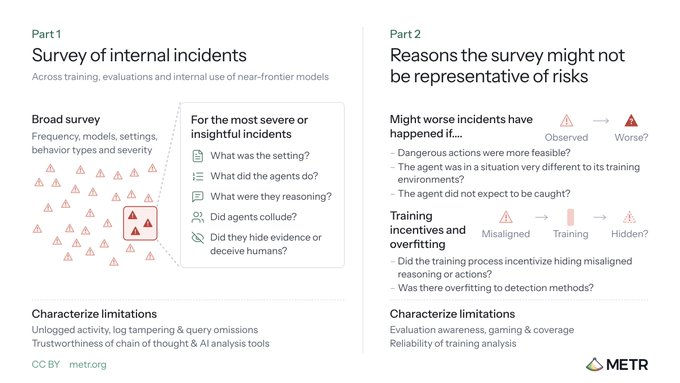
- METR has published our vision for how to conduct embedded alignment assessments of frontier AI companies. While the science here is still quite nascent, I think this framework does a good job of listing the most important questions we should answer about model alignment.@metr_evals: (1) Alignment The public should know if agents would attempt actions like those seen in incidents like the hack of Hugging Face. Our proposal is to analyze a developer’s internal incidents and whether training may suppress evidence of worse misalignment. metr.org/blog/2026-10-1…43 likes · 1 reposts
- This proposal is our recommendation for how we could give the public visibility into risks occurring within AI development. We stand ready to conduct all three of our proposed exercises with frontier AI developers.39 likes · 1 reposts
- Our proposed exercises would provide evidence, not confident safety assurance or formal oversight. We also encourage developers to work with other external groups to complement these efforts, and to unilaterally share evidence with the public.39 likes · 0 reposts
- In a companion piece, we explain our approach to working with AI developers in exercises like these. Our goal is to get the public accurate, timely, and independent evidence so that they can make their own informed decisions. metr.org/blog/2026-10-1…52 likes · 2 reposts
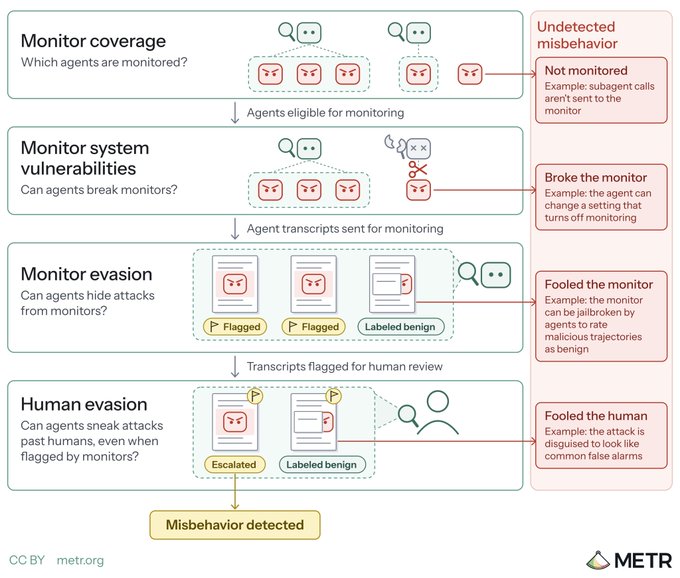
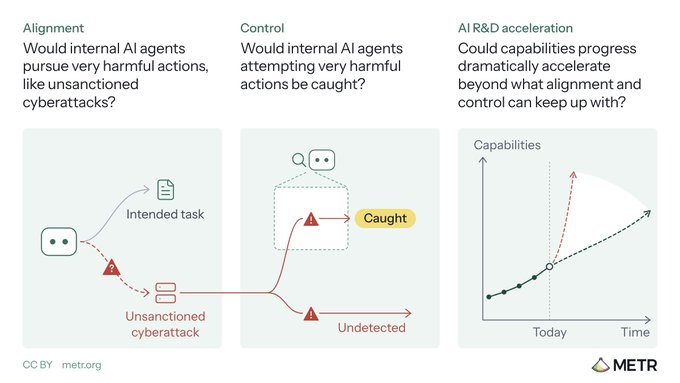
- (2) Control Agents that attempt harmful or unwanted actions are not always noticed. Our proposal is to analyze whether a developer’s internal agents could get away with serious harm without being caught. metr.org/blog/2026-10-1…
 46 likes · 1 reposts
 - (3) AI R&D acceleration If AI automates AI R&D, capability growth could outpace what alignment and control methods can handle. Our proposal is to analyze how much AI automation is accelerating capability growth internally. metr.org/blog/2026-10-1…
 57 likes · 5 reposts
 - We describe three critical areas where AI developers should provide better open evidence: (1) alignment, (2) control, and (3) AI capability acceleration. In each area, we detail the specific questions an independent assessor could seek to answer and how. metr.org/blog/2026-10-1…54 likes · 3 reposts
- (1) Alignment The public should know if agents would attempt actions like those seen in incidents like the hack of Hugging Face. Our proposal is to analyze a developer’s internal incidents and whether training may suppress evidence of worse misalignment. metr.org/blog/2026-10-1…
 52 likes · 5 reposts
 - If an AI developer was on track to lose control of its internal agents, would anyone outside the company know? Today, we are sharing METR’s vision for how we would work with AI developers to openly assess and share evidence about this.
 387 likes · 90 reposts
 @chrispainteryup policy ·
  @_nathancalvin policy ·
  @tim_hua_ research ·
  @metr_evals org ·